
National Security Notebook | Number 14, June 24, 2026
Iran’s imperial ambitions are making a comeback.

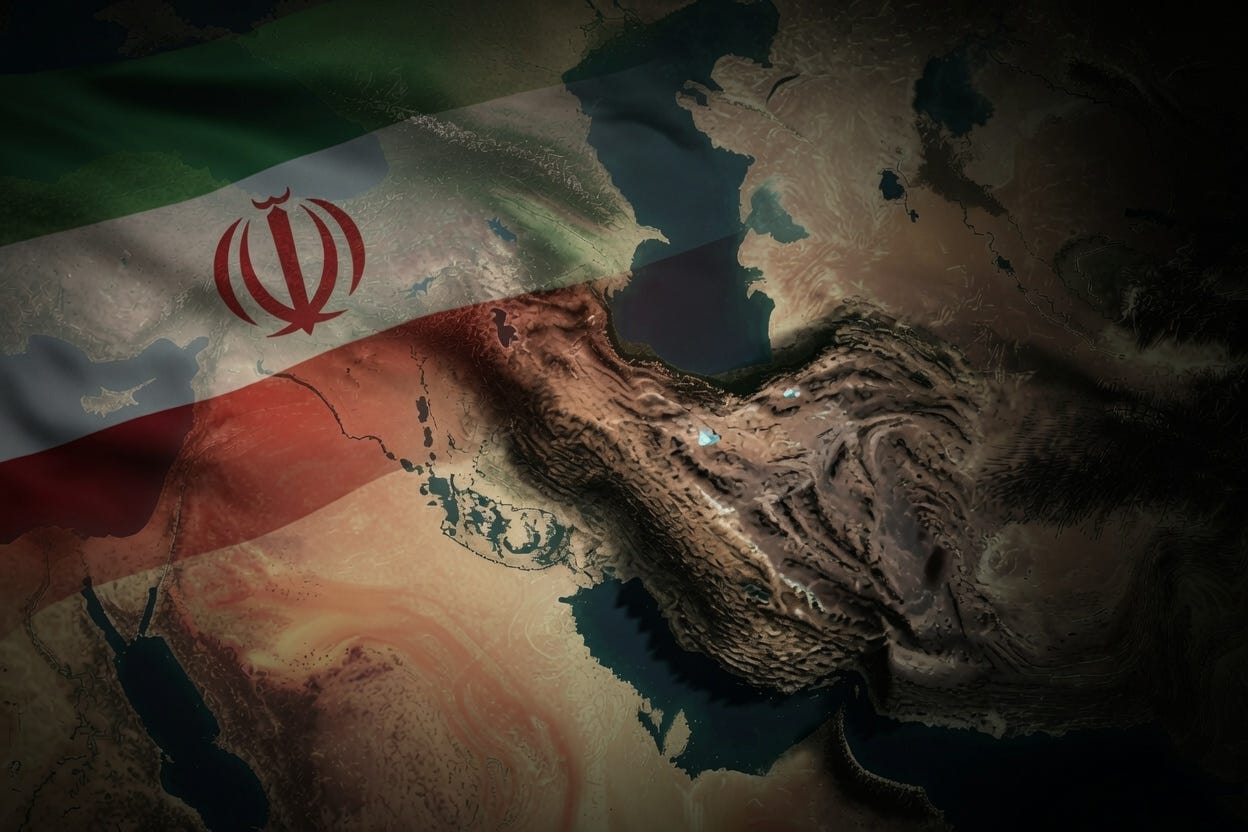
Although we don’t usually approach it in that way, Iran can only be fully understood in the context of its imperial past. Before the Ayatollah Ruhollah Khomeini’s 1979 Revolution made it an Islamic Republic, Iran was ruled by a succession of empires spanning more than a millennium. And as these empires waxed and waned, they brought a broad swath of the world under their control.
Iran is still very much an imperial power – though, these days, those impulses are dressed up in Islamist trappings. Last year, in The New Imperialists, AFPC President Herman Pirchner and I mapped out the extent of those outstanding claims. They include:
Territorial disputes with neighboring Iraq over features such as the Shatt al-Arab river, which help drive Iran’s persistent efforts to influence Iraqi politics and society;
Tensions with the United Arab Emirates over the sovereignty of three islands in the Persian Gulf: Abu Musa and the Greater and Lesser Tunbs;
Lingering designs over the entirety of the Kingdom of Bahrain, which was an integral part of successive Persian empires and became viewed as imperial Iran’s “14th province”;
Competing claims over water resources shared with Afghanistan, like the Helmand River, and;
Ethnic and sectarian tensions with Azerbaijan, and persistent Iranian efforts to subvert that country’s sovereignty to prevent separatism among its own Azeri minority.
All of which makes good sense, given Iran’s rich imperial history. And now that its conflict with America seems to be over, on decidedly favorable terms for Tehran to boot, those imperial urges appear to be making a comeback.
A new report from Israel’s Jerusalem Center for Security and Foreign Affairs (JCFA) highlights that, in the wake of the war, the Iranian regime has begun reviving its claims to nearby Bahrain. In particular, the JCFA notes a recent column by the pro-regime Kayhan newspaper arguing that (in the Center’s words) “Bahrain remains, by right, part of Iranian territory,” which is “now lost to U.S. and Israeli domination” (because Manama hosts the U.S. Fifth Fleet and is a charter member of the Abraham Accords.)
The resulting message is clear: the Iranian regime should take a more assertive stance toward the Gulf monarchy, and Iran’s “compatriots” in Bahrain should stand ready to assist when it does.
Of course, this could just be idle chatter on the part of Iranian nationalists, who have been emboldened by what they think will turn out to be a favorable regional outcome for their government. Still, if I was in Bahrain, I’d be nervous… and if I was in any of Iran’s other former imperial holdings, I’d be watching this issue closely. After all, as the Russians are fond of saying, “the appetite comes with the eating.”