
National Security Notebook | Number 12, June 6, 2026
Is Iran still the Islamic Republic?

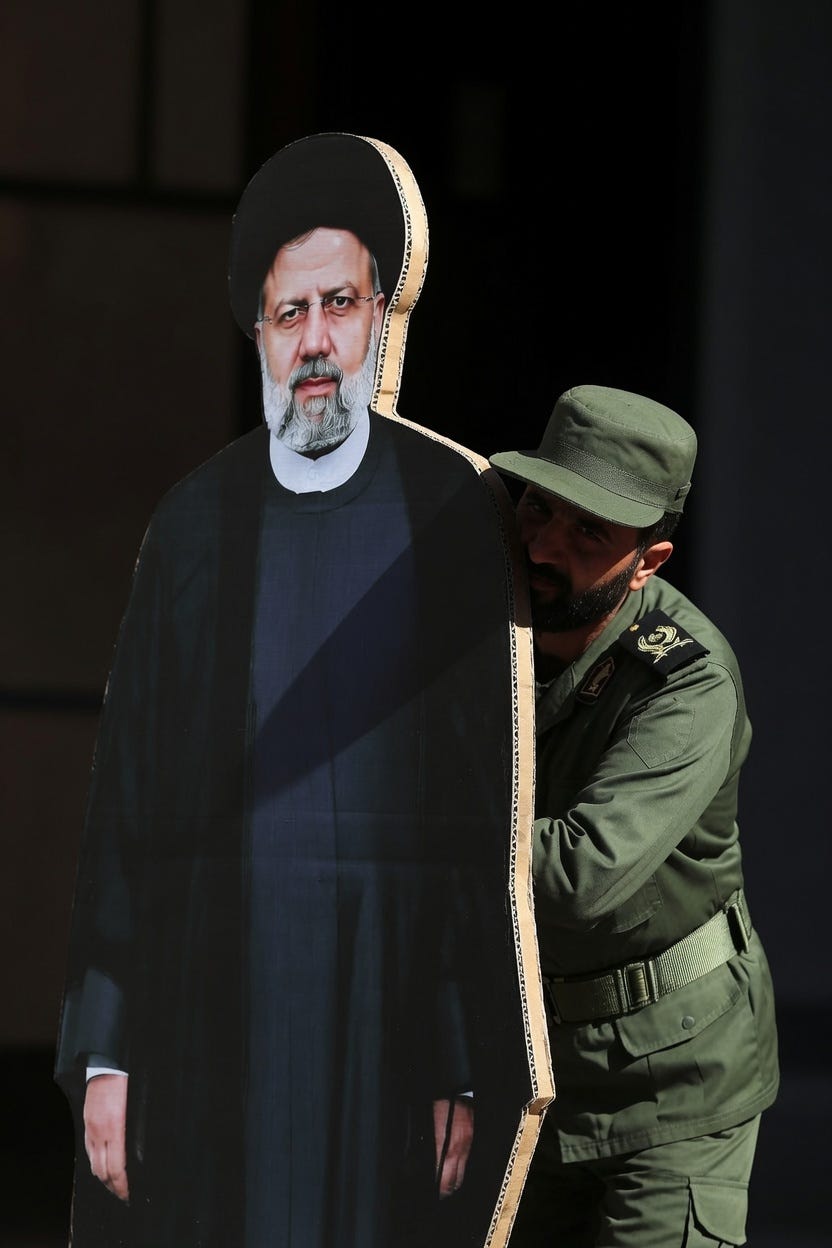
There’s an old saying that authoritarian regimes tend to name themselves the opposite of what they actually are. For instance, the Democratic People’s Republic of Korea (as North Korea’s repressive Stalinist regime is officially known) is neither democratic nor a republic. It’s not even the real Korea, per se, since its southern neighbor is orders of magnitude more prosperous and a much more authentic representative of Korean culture and potential.
The same can now be said about the Islamic Republic of Iran. When the U.S. and Israel launched the current war in late February, the first thing they did was to carry out a decapitation strike that killed Iran’s Supreme Leader, Ali Khamenei, and wiped out the top echelon of the country’s military leadership. Since then, a new Supreme Leader has been installed and a fresh crop of officials affiliated with the Islamic Revolutionary Guard Corps has assumed control in Tehran.
But lots of lingering questions remain. For my money, the most important is whether Iran’s new Supreme Leader is even still breathing. After all, Mojtaba Khamenei has been conspicuously absent from view in recent weeks – communicating exclusively via the occasional pronouncement and social media message.
Over the past several weeks, I’ve been posing that question to various American and foreign intelligence officials. Their consensus answer seems to be: “yes, but just barely.” The same military strike that killed his father, they say, crippled Mojtaba, either disfiguring him beyond suitability for public view or putting him into a lingering coma. (Meanwhile, there’s at least some circumstantial evidence – like this and this – suggesting that Mojtaba in fact may have already met his maker.)
Maintaining the fiction that he is still functioning, though, is all-important for the IRGC. After all, the legitimacy of the Revolutionary Guards would be irrevocably shattered if it turns out there is, in fact, no more Islamic revolution for them to guard. On the other hand, the current situation represents pretty much the best of all possible worlds, as far as the Guards are concerned, since the edicts ostensibly coming from Iran’s new Supreme Leader have (shockingly) bolstered their power even further and given them unfettered control over the country’s foreign policy and national security.
Getting to the bottom of things would determine a great deal – including whether the IRGC is a pretender that has effectively hijacked the state. The answer would be of great interest to ordinary Iranians, since authoritative public opinion polling makes clear that Iranians overwhelmingly oppose the idea of military rule. For that reason, you can be sure that this is not information Iran’s remaining regime is eager to divulge… since doing so would dramatically diminish whatever limited legitimacy it possesses.
The very same logic should make this story a major focus of American messaging, whenever the U.S. government finally gets around to rebuilding our informational capabilities in a meaningful way.